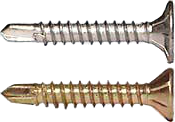
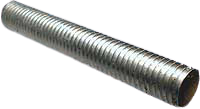
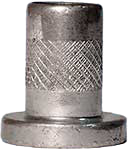
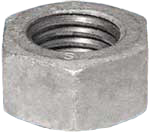
A chipboard screw functions similarly to a wood screw except that it’s used when the installation calls for extra strong hold. A chipboard screw is able to provide that extra hold because it’s threaded all the way to the underside of its head while the wood screw is not. A chipboard screw is also a self-tapping screw which works on all types of timber such as MDF, hardwood, softwood, and, of course, chipboard. Generally, screws don’t need nuts to get fastened. They become secure by being tightened into the hole using a screwdriver. Screws are usually shorter than the width of the material being screwed and don’t protrude on to the other side.
A chipboard screw is typically made of carbon steel or stainless steel. It can also be galvanized to provide corrosion resistance. The advantages of chipboard screw, aside from the extra strength it provides, are that 1) it’s easy to screw in, 2) it doesn’t crack or split the wood, 3) it cuts cleanly, 4) it’s snapping resistant, and 5) has a long service life.
A Hardiflex screw is commonly used on hardiflex boards. It’s also called window screw. It’s a special type of self-tapping screw because you may install it without plugs. It has either a flat or cylindrical head depending on the aesthetic and the window frame materials.
Similar with bolts, screws are also a major category of threaded fasteners. Screws and bolts share a lot of likenesses such as being made of metal and being characterized by a helical ridge. They are both used to fasten materials by the engagement of the screw thread or the external thread with a similar internal thread in the matching part.
Truly, screws and bolts are hard to differentiate with the naked eye. They are both threaded materials and have a head for tightening the fastener, but the most obvious difference is that a bolt is not usually threaded all the way along its shank as it has a plain portion. On the other hand, a screw is threaded fully to the head.
Generally, screws don’t need nuts to get fastened. They become secure by being tightened into the hole using a screwdriver. Screws are usually shorter than the width of the material being screwed and don’t protrude on to the other side.
A drywall screw, also called a gypsum screw, is a self-tapping steel screw with countersunk head. It’s phosphate coated to protect it from corrosion. Drywall screws are commonly used in attaching plasterboard, gypsum board, or plaster of Paris work to timber supports or Gypframe C or I studs.
A screw tek or tek screws can be used on soft materials only such as wood and thin metal. Its self-tapping thread and drilling point allow them to be installed without using a drill.
Screws are also a major category of threaded fasteners. Screws and bolts share a lot of likenesses such as being made of metal and being characterized by a helical ridge. They are both used to fasten materials by the engagement of the screw thread or the external thread with a similar internal thread in the matching part.
Truly, screws and bolts are hard to differentiate with the naked eye. They are both threaded materials and have a head for tightening the fastener, but the most obvious difference is that a bolt is not usually threaded all the way along its shank as it has a plain portion. On the other hand, a screw is threaded fully to the head.
Generally, screws don’t need nuts to get fastened. They become secure by being tightened into the hole using a screwdriver. Screws are usually shorter than the width of the material being screwed and don’t protrude on to the other side.
Thread rods or threaded rods are the studs used in plumbing, building, fabrication, and maintenance works. Its main purpose is to stabilize or join woods, metal and other materials for wall or furniture construction. It makes sure your installations get high high grip strength and that the tension is evenly distributed when mounting and securing components. In fact, thread rods are designed for tension. Some mistake thread rods for bolts. But the latter is generally smaller and threaded on one side only.
The tensile force allowable for a galvanized threaded rod depends on its type. The American Institute of Steel Construction recommends
𝛲 = 0.33Fy𝝿d2
4
where Fy is the yield strength of the material.
It’s called threaded rod because, as the name suggests, it is threaded on both ends. This galvanized thread rod is coated with zinc to protect it from rusting, so you can rest assured that it can be used long term.
Our stock of thread rods are of different configurations and diameter. Currently, we have 1/4 x 10 ft., 5/16 x 10 ft., 3/8 x 10 ft., 1/2 x 10 ft., 5/8 x 10 ft., 3/4 x 10 ft., and 10mm x 10 ft.
An anchor nut, sometimes called a plate nut, is a self-locking, self-wrenching fastener. It provides a permanent nut element in a material so that other materials can be attached to it using a screw. In fact, it is a reliable way of making sure nuts and screws (for additional components) are placed exactly where they should be onto a workpiece.
It’s particularly used for space constrained areas, ones that are difficult to access, or spots that are not thick enough, commonly known as inaccessible or blind locations. Basically, areas where threads would be too big. A plate nut is also recommended in areas where welding is not advisable. The heat coming from the welding process can weaken a surface, which may cause deformities and breakage later on. However, for stress purposes, a plate nut may be welded in place. This is because drill holes will be minimized. An anchor nut is ideal for stressed-skin applications because using these fasteners do not require additional stresses around the bolt hole.
Anchor nuts come in different styles. There are those with lugs and those without. This plate nut doesn’t come with lugs. Instead, it’s designed to be built right into the workpiece. It will be secured using rivets.
A connecting nut, or more commonly referred to as a coupling nut, is used to join two bolts, male threaded rods, or pipes together. It may also be used to extend length. It can join any two externally threaded objects as long as both are of the same diameter and thread pitch. For example, it can couple a hanger bolt and a threaded rod or two threaded rods.
At times, a coupling nut may also be used as a standoff or spacer to raise one part of an assembly higher than the other. If connecting two external items with different sizes, you should get the reducing connecting nut. There are instances as well when you need to tighten a rod assembly inware or to press it outward. Coupling nuts can also help you with either of those applications.
It is slightly different from a sleeve nut in that a coupling nut offers a right hand thread. Whereas, a sleeve nut offers both left and right hand threads plus it’s usually longer. The taper also begins in the middle to the end, with a stop in the middle.
Choosing the right connecting nut depends on your project.
Nuts and bolts that are either large or used for special applications need to meet a standard strength requirement. Hence, the grading in the name of this nut. Grade 8 bolt strength or class 8.8 means it’s high strength.
This classification means the nut is medium carbon steel, quenched and tempered. All sizes below 16mm means they have a Proof Lead of 580MPa, minimum Yield Strength of 640 MPa, and minimum Tensile Strength of 800 MPa. On the other hand, those that are more than 16mm above have a Proof Lead of 600MPa, minimum Yield Strength of 660 MPa, and minimum Tensile Strength of 830 MPa.
Grade 8 bolt strength is useful for motors, engines, railroad equipment, and processing equipment. This is because these bolts or nuts, as mentioned previously, have high tensile strength, enabling them to perform well in most environments. However, this is not advised in areas with extreme temperatures.
If you are replacing an existing nut, make sure to get either the same or a higher grade. Don’t replace Grade 8 bolt strength with a Grade 5.
Hot dip galvanization means this nut underwent a process that will prevent corrosion. It started with chemical cleaning and ended with the coating process.
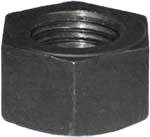
Just like the Gr 8.8 Nut, this 2H nut is also hot dip galvanized which means it went through a process that will prevent it from corroding. Specifically, this process includes chemical cleaning to get rid of rust, dirt, oil, and other unwanted elements that may have attached to it. The second part is the coating process.
A 2H nut has a medium strength. Its primary uses are for pressure valves and vessels, pipelines, pressure controls, chemical, gasoline, and oil storage systems, natural gas and steam storage, and transmission of chemicals, gasoline, oil, steam, and natural gas.
Basically it’s best for high temperature applications and high-pressure conditions because it’s designed to withstand extreme environment conditions.
A 2H Nut should not be confused with a 2HM Nut. Although they have the same chemical composition, the manner they are tested are different. The former requires only a small sample to be tested while the latter needs the whole population to undergo testing.
The hardness requirements and the proof load between the two also differ. The 2H Nut has a Brinell Hardness minimum of 147 (depending on the size) while the 2HM’s is 159. The proof load of a ½ in. 2H and 2HM are 24, 830 and 21,800, respectively.
Nuts are fasteners used on threaded rods. Nuts may be used alone or with other fasteners such as a washer or mating bolt to ensure the nut stays in place. A mating bolt is used to join or fasten more than one part together. In the early days, square nuts and bolt heads were the most common fasteners. This is because their shapes make them easy to manufacture. This was particularly beneficial back in those days when machines were rare. These days, square nuts and bolt heads are still used, albeit rarely, when the application requires a maximum amount of torque. A hex nut, on the other hand, are commonly used in tight spots because it has “good granularity of angles for a tool to approach from.”
Nuts are another type of fastener with a threaded hole. Usually, a nut is the counterpart of bolt. Bolts can hold things together tightly thanks to the nuts. Nuts and bolts are used together to clamp two or more parts having unthreaded holes together. The two are kept together by a combination of several factors including the friction of their threads, stretching of the bolt, and compression of the parts that are to be held together.
To simplify, nuts are round discs that have a hole inside them used with bolts to fasten objects. In normal use, a nut-and-bolt joint holds together because the bolt is under constant tensile stress. The tensile stress pulls the nut threads against the bolt threads providing a clamping force that would prevent axial movement. However, when a joint is subjected to vibration, there is a tendency for the nut to easily loosen, therefore, specialized locking nuts are preferred in this situation.
A high-tensile nut means it can take on a high amount of stress before breaking. It can be used in environments which are often exposed to stressful and heated conditions. It’s used with bolts with less than the proof stress of the nut. Grade 8 bolt strength is useful for motors, engines, railroad equipment, and processing equipment. This is because these bolts or nuts, as mentioned previously, have high tensile strength, enabling them to perform well in most environments. However, this is not advised in areas with extreme temperatures.