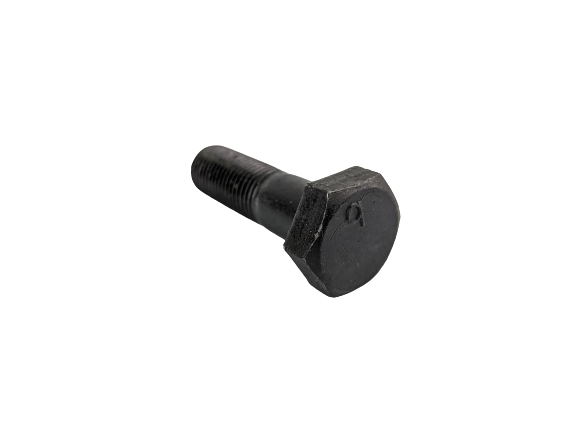
Propeller bolts are special bolts used in different automotive propellers. They’re usually hi-tensile and tetanized. Propeller bolts do not work for all wood propellers. Also, a hub’s thickness defines the length needed for the prop bolts.
Automotive bolts such as the pop bolt are threaded fasteners, with a head on end. Using these bolts need pre-drilled holes and nuts. Sometimes it may also require a washer to make sure it won’t loosen. The most common types of automotive bolts are hub bolts, head bolts, and u-bolts. Perhaps the most popular of these are the head bolts.
Moving on to the crucial role the bolts play in car’s safety, it is important to note that bolts must be securely fastened. A loose bolt may lead to tragic vehicular accidents. Automotive fasteners are made of different materials such as steel, iron, brass, nickel, and aluminum. Despite the differences in their built, one thing remains the same: they’re all made to withstand extreme environments.
Battery terminals are the electrical contacts that connect a charger or load to a battery. They consist of recessed female threads to attach bolts or other adapters. The bolts can either be the positive or the negative terminals. These bolts are replaceable just in case the current ones start to malfunction.
Bolts are one of the most common basic hardware parts you can see in any industry–automotive, construction, agriculture, etc. Bolts definition is they are mechanical fasteners that connect different parts. Its parts include the head and a threaded cylindrical body. Bolts are usually used with washers and nuts to lock them in position and prevent loosening or crushing. One reason bolts are popular across all industries is that it makes assembly, disassembly, and reassembly easier compared to permanent fastening such as welding.
Bolts should not be confused with screws, however. As mentioned previously, bolts definition is they are mechanical fasteners that connect different parts. Screws are also mechanical fasteners; however, how they look and how they are used are different.
An axle is the rod or shaft that connects the wheel and the vehicle. It rotates and supports the weight of the vehicle. An axle stud bolt is what keeps the axle connected to the stud.
A stud is a relatively long rod that is threaded on both ends; the thread may extend along the complete length of the rod. It usually has no head, and simply acts as a threaded rod onto which nuts can be attached.
Bolts are one of the most common basic hardware parts you can see in any industry–automotive, construction, agriculture, etc. Bolts definition is they are mechanical fasteners that connect different parts. Its parts include the head and a threaded cylindrical body. Bolts are usually used with washers and nuts to lock them in position and prevent loosening or crushing. One reason bolts are popular across all industries is that it makes assembly, disassembly, and reassembly easier compared to permanent fastening such as welding.
Bolts should not be confused with screws, however. As mentioned previously, bolts definition is they are mechanical fasteners that connect different parts. Screws are also mechanical fasteners; however, how they look and how they are used are different.
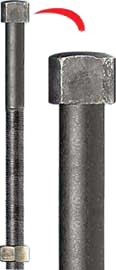
You can find a center bolt in a leaf spring assembly. It’s placed in the center of each leaf in an assembly (in the hole). There are usually 4-5 leaves, and each one carries a hole where a center bolt is inserted. The center bolt holds these leaves together and connects them to the axle through the bold head. This is what gives vehicles rear suspension.
A center bolt is vulnerable. Hence, it’s crucial for one to find high-quality center bolts to make sure it doesn’t break or bend. This is possible if the leaves are bound tightly together by a u-bolt. The latter clamps the leaves on each side of the center bolt. Both the center bolts and the u-bolts rely on each other to keep the leaf springs solidly bound. If one gets too loose, it may lead to breakage because the leaves put out too much pressure.
Fastening a u-bolt means there should be enough torque specs. Inaccurately fastening the u-bolt, as mentioned earlier, can damage the center bolt, causing inadequate suspension for your vehicle. The effect is not immediate, however. It may start from bending the center bolt then the leaves in the assembly follow.
The primary difference between the ordinary and imported center bolt is the materials used. Both are of high-quality, but the latter is more reliable for heavy applications.
A U-bolt is a bolt bent into the shape of the letter “u”. A square bend u-bolt refers to the style the u-bolt is bent. A square bend is more angular than the round-bend. U-bolts may appear simple, but the role of this material should not be underestimated. In fact, this element can be the difference between solid structures and on-site catastrophe. Usually, U-bolts are a jack-of-all trades in construction as they can offer a wide range of use. But most of the time, they are primarily used to support pipe works.
A major use of U-bolts is for hanging pipes. Because gravity can be hard on piping, the wrong setup can lead to disaster. By fixing a U-bolt to an overhead structure, beam, or ceiling, the risk of it happening can significantly reduce.
It can also work as a restraint. U-bolts keep piping from moving, banging into other structures, and wearing down. Aside from the mentioned features and functions of U-bolts, they are also common in building and construction applications like roofing and foundation stability. It can even secure motor and engine shaft components.
As U-bolts are now being used by a much wider market to clamp any kind of tubing, a more solid and convenient measurement system needs to be used. Five elements uniquely define any U-bolt namely material type, rod diameter, inside diameter, inside length, and thread dimensions.