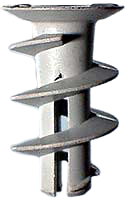
Plasterboard fixing GK is known to take the least installation time in gypsum plasterboard. But because of its spiral design, it may also be used in concrete walls even when the thickness of the wall panel is unknown. It’s made from high-quality nylon, which makes the installation stand the test of time.
Plasterboard fixing GK is used in pre-positioned installation. The spiral design allows the installation to fit snugly in place. It’s used with wood, sheet metal, and chipboard screws up to 5mm thick. Eye screws and hook may be used as well.
Fixings are a general term for items designed to attach objects to certain surfaces such as floors, walls, roofs, doors, and the likes, holding them steadily, usually permanently. They are a form of connector and play a particularly important role in construction.
Fixing is usually the key component in attaching larger or immovable objects. Examples include fixing a cupboard to a wall, a handle to a door, or a timber joist to a wall plate. Just like anchors, fixings also need to resist pull forces and shear forces.
Knowing the materials you need for fixing would totally save you from unwanted detachments and accidents. For instance, a cavity wall fixing is a method of attaching or supporting something to a wall when the wall is hollow or has a space behind it. Securing items to these types of walls therefore requires a strong and reliable cavity wall fixing to protect both your wall and the item you wish to attach.
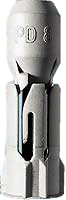
If you’re looking for a flexible expansion plug for gypsum plasterboard and fiberboard or any wooden panel, board fixing PD is the best option. It has a high level of installation security.
It’s made from high-quality nylon and used in pre-positioned installation. It can be used in both low-cavity depths and any thickness of board panel.
It works by expanding in the building material once the screw is tightened then the cone is pulled into the sleeve. It’s compatible with almost all hook and eye screws as long as the diameter does not exceed 6mm.