Self drilling anchors (SDA) are perfect for unstable ground conditions because they are a special type of rod anchors. It may be used in gravel, sand, clays, soft to medium fracture rock formations, and silt. This is because SDAs work well with difficult soil conditions and limited access. Therefore, you can benefit from extra corrosion protection, decreased material cost, and high installation rate.
SDAs are applied to underpinnings, earth retention, new construction, tunneling, settlement, and stabilization.
Self drilling anchor consists of a hexagonal nut, a bearing plate, extension couplings, a sacrificial drill bit, and hollow anchor rod.
The productivity of installing a self drilling anchor relies heavily on the sacrificial drill bit. Unlike other drill bits, the ones that come with SDA must meet several criteria. One it should be of high-quality, have enough length (proportionate to the anchor), and meet geology and geometry requirements.
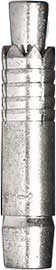
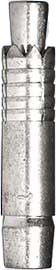
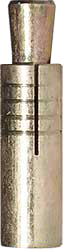
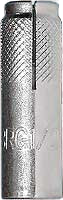
There are a variety of applications possible for construction anchors. Typically, they are used to secure objects to materials that are normally resistant to screw or nails, for example, concrete. There are a lot of different types of anchors to choose from depending on your needs. Structural members which need anchors to be attached to masonry involves ledger beam, girders, floor and roof diaphragms, and other materials that might need to transfer their load to the masonry. Not only do anchors transfer gravity loads to masonry but they also can transfer lateral loads as well. Cut anchor is a specific type of anchors that is mostly used in concrete. It allows a protrusion-free installation of hex bolts, push-in fittings, and suspension bolts after installation. It is one of the most common and highly reliable tapped anchors. Like the other types of anchors, it is installed through drilling a hole, positioning it inside, and hammering it in with striking rod.
A drop-in anchor is a female anchor, that is it’s internally threaded. It’s designed only for solid concrete, just like the wedge anchor. It cannot be used with other types of materials such as brick or block-based. A drop-in anchor is dropped into a pre-drilled hole before it expands using a setting tool. The size of a drop-in anchor is determined by the inside diameter.
There are a variety of applications possible for construction anchors. Typically, they are used to secure objects to materials that are normally resistant to screw or nails, for example, concrete. There are a lot of different types of anchors to choose from depending on your needs.
Structural members which need anchors to be attached to masonry involves ledger beam, girders, floor and roof diaphragms, and other materials that might need to transfer their load to the masonry. Not only do anchors transfer gravity loads to masonry but they also can transfer lateral loads as well.