A hook bolt is a hooklike steel fastener which is threaded on the straight side and not on the bent portion. The threaded side comes with a nut. Just like a hook screw, a hook bolt is used for hanging items on walls or ceilings. However, a hook bolt can carry heavier loads than a hook screw. Also a hook bolt is better for concrete, blocks, or bricks. It has plenty of applications ranging from hanging frames, house plants, art, and a whole lot more.
Installing a hook bolt requires a pre-drilled hole. Sometimes, a hook bolt requires wooden studs behind a drywall to make it more stable. Washers are added to the mix to make it stable despite vibration or the heavy weight of the item hanged. Other times, an anchor is required to keep the hook locked in place.
The thicker a hook bolt is, the heavier load it can take. To ensure the bolt doesn’t break or the object doesn’t fall, it’s a good idea to distribute the load among many hook bolts. The heavier an item is, the more bolts needed. Springs can also help add strength and security to the bolts.
Unlike u-bolts, J-bolts are j-shaped fasteners. It’s threaded on the “straight” side while the bent end is used as a hook around the rebar for support. J-bolts are commonly used in securing walls to concrete foundations. The bent end may be cast in concrete for use as an anchor bolt.
A U-bolt, on the other hand, is a bolt bent into the shape of the letter “u”. It’s a curved bolt that has threads on each end which makes it fit perfectly around pipes or tubes. A major use of U-bolts is for hanging pipes. Because gravity can be hard on piping, the wrong setup can lead to disaster. By fixing a U-bolt to an overhead structure, beam, or ceiling, the risk of it happening can significantly reduce.
Bolts are one of the most common basic hardware parts you can see in any industry–automotive, construction, agriculture, etc. Bolts definition is they are mechanical fasteners that connect different parts. Its parts include the head and a threaded cylindrical body. Bolts are usually used with washers and nuts to lock them in position and prevent loosening or crushing. One reason bolts are popular across all industries is that it makes assembly, disassembly, and reassembly easier compared to permanent fastening such as welding.
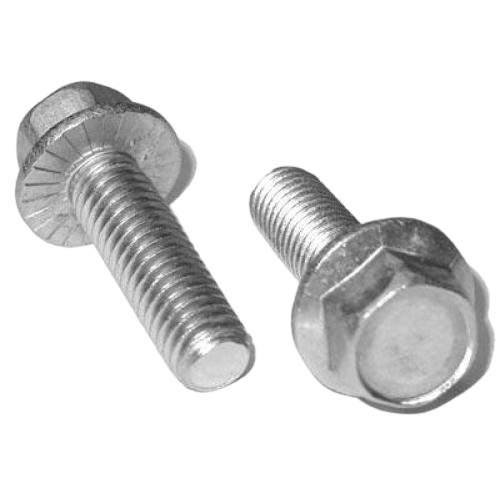
A flange bolt is like a flange nut in that it has a circular flange that functions as a built-in washer. There are different types of flange bolts: partial thread, full thread, full thread and serrated, and oversize full-thread and serrated. Flange bolts have hexagonal heads which is driven by a wrench.
Bolts are one of the most common basic hardware parts you can see in any industry–automotive, construction, agriculture, etc. Bolts definition is they are mechanical fasteners that connect different parts. Its parts include the head and a threaded cylindrical body. Bolts are usually used with washers and nuts to lock them in position and prevent loosening or crushing. One reason bolts are popular across all industries is that it makes assembly, disassembly, and reassembly easier compared to permanent fastening such as welding.
Bolts should not be confused with screws, however. As mentioned previously, bolts definition is they are mechanical fasteners that connect different parts. Screws are also mechanical fasteners; however, how they look and how they are used are different.
As stated above in the bolts definition section, bolts are headed and have a cylindrical, threaded body. Screws are headed and have a cylindrical, threaded body as well. However, the thread on screws are capable of piercing a surface. Also screws do not require nuts and washers to keep them in place. For this reason, screws may be drilled directly into a surface while bolts require a pre-drilled hole. This is why the opposite end of screws are usually sharp–to help pierce a surface easily.
A stud bolt is a bolt with two hexagonal nuts on both ends. It’s used to replace the common bolts and nuts combo. Stud bolts are commonly use in flange connections, a method of connecting two pipes together. These are the different types of stud bolts: continuous threaded, tap end, double end, double end with reduced shank, flange, and welding studs.
Bolts are one of the most common basic hardware parts you can see in any industry–automotive, construction, agriculture, etc. Bolts definition is they are mechanical fasteners that connect different parts. Its parts include the head and a threaded cylindrical body. Bolts are usually used with washers and nuts to lock them in position and prevent loosening or crushing. One reason bolts are popular across all industries is that it makes assembly, disassembly, and reassembly easier compared to permanent fastening such as welding.
Bolts should not be confused with screws, however. As mentioned previously, bolts definition is they are mechanical fasteners that connect different parts. Screws are also mechanical fasteners; however, how they look and how they are used are different.
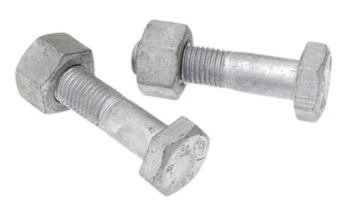
A hot-dip galvanized bolt is a bolt immersed in molten zinc for protective coating. This coating makes the bolt corrosion resistant yet more affordable than stainless steel.
Bolts are one of the most common basic hardware parts you can see in any industry–automotive, construction, agriculture, etc. Bolts definition is they are mechanical fasteners that connect different parts. Its parts include the head and a threaded cylindrical body. Bolts are usually used with washers and nuts to lock them in position and prevent loosening or crushing. One reason bolts are popular across all industries is that it makes assembly, disassembly, and reassembly easier compared to permanent fastening such as welding.
Bolts should not be confused with screws, however. As mentioned previously, bolts definition is they are mechanical fasteners that connect different parts. Screws are also mechanical fasteners; however, how they look and how they are used are different.
Hex bolts are also called hexagon screw head bolts, hex cap bolts, hex-cap screws, or machine bolts. They are a very common choice when it comes to construction and repair. There is a variety of sizes and diameters. Whichever bolt you choose, just make sure that it’s from a credible bolt and nut supplier.
The grading of a bolt refers to its material strength. As its name implies, ordinary hex bolts have a hexagonal head and come with machine threads for a firm and rough handling. Hex bolts are available with standard threading or full threading, depending on the length of the bolt.
YZP or Yellow Zinc Plating refers to the extra coating the bolt receives. It has a yellow or gold finish. Its purpose is to increase overall protection and avoid corrosion.
From automotive to marine, coastal, and high temperature environments, this specific type of bolt can be used—the ordinary hexagonal bolt, or hex bolt. As its name implies, ordinary hex bolts have a hexagonal head and come with machine threads for a firm and rough handling. Hex bolts are available with standard threading or full threading, depending on the length of the bolt.
Hex bolts are also called hexagon screw head bolts, hex cap bolts, hex-cap screws, or machine bolts. They are a very common choice when it comes to construction and repair. There is a variety of sizes and diameters. Whichever bolt you choose, just make sure that it’s from a credible bolt and nut supplier.
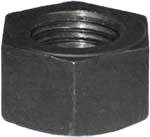
A B.I. hex bolt means it’s black iron instead of galvanized iron. The latter has zinc to prevent corrosion. The disadvantage of this, however, is it can’t be used in gas lines as the zinc starts to react with gas, causing flaking, overtime.
Nuts are fasteners used on threaded rods. Nuts may be used alone or with other fasteners such as a washer or mating bolt to ensure the nut stays in place. A mating bolt is used to join or fasten more than one part together. In the early days, square nuts and bolt heads were the most common fasteners. This is because their shapes make them easy to manufacture. This was particularly beneficial back in those days when machines were rare. These days, square nuts and bolt heads are still used, albeit rarely, when the application requires a maximum amount of torque. A hex nut, on the other hand, are commonly used in tight spots because it has “good granularity of angles for a tool to approach from.”
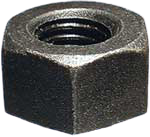
A 2H nut has a medium strength. Its primary uses are for pressure valves and vessels, pipelines, pressure controls, chemical, gasoline, and oil storage systems, natural gas and steam storage, and transmission of chemicals, gasoline, oil, steam, and natural gas.
Basically it’s best for high temperature applications and high-pressure conditions because it’s designed to withstand extreme environment conditions.
A 2H Nut should not be confused with a 2HM Nut. Although they have the same chemical composition, the manner they are tested are different. The former requires only a small sample to be tested while the latter needs the whole population to undergo testing.
The hardness requirements and the proof load between the two also differ. The 2H Nut has a Brinell Hardness minimum of 147 (depending on the size) while the 2HM’s is 159. The proof load of a ½ in. 2H and 2HM are 24, 830 and 21,800, respectively.
Hook screws probably are one of the most used screws in the household. It is great for hanging up tools and other items in your room, workshop, or garage. A hook screw is a small hook with a threaded shank for screwing into woodwork or paneling. They are ideal for hanging pictures and mirrors but have limitless possible applications, you can use them as cup hooks or to hang up light ladders in the garage. Installing a hook screw is easy. To power drive hook screws, drill a pilot hole that is slightly smaller than the diameter of the hook screw shank. Feed the screw into the hole on your hook and line it up to the wall. Lastly, screw or hammer the hook into the wall. Another way to install your hook screw is through getting wall anchors for your screws. Drill a hole the same size as your wall anchor and insert your anchor in the hole you made. Place the screw into the hook and make sure that it is aligned with the anchor on your wall. Secure the screw in the center of your anchor.